Roots, Risks, and Responsibility
The roots on the trail help explain what happened, but they do not change who bore the risk.

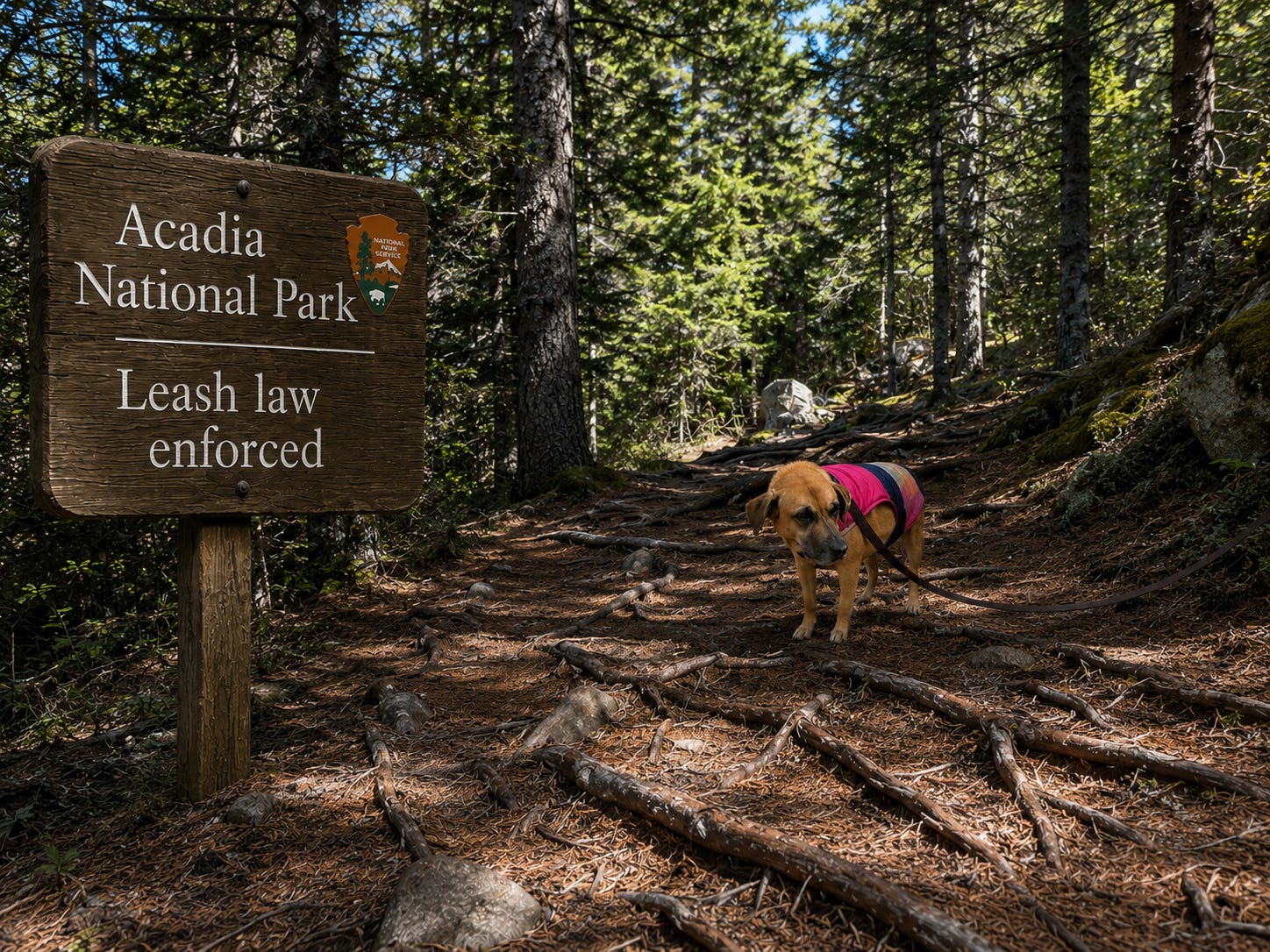
While hiking in Acadia National Park recently, Charlotte and I encountered an off-leash dog on a trail where dogs are required to be leashed.
One moment we were enjoying a quiet stretch of trail with very few people around. The next, a pit bull wearing a prong collar came running toward Charlotte. I immediately called out to the owner to control her dog. She eventually attached the leash, but what followed was infuriating, both for potential danger and for the frequency with which this sort of encounter happens.
Following a quick “I’m sorry,” the explanations —and excuses—arrived immediately.
The trail was difficult. There were roots everywhere. She knew the leash law. She had tried to comply. Conditions made compliance challenging. She didn’t know others were on the trial.
And on and on.
Perhaps all of those things were true for her. But as in other life circumstances, if an experience can’t be done safely, the best course of action is to pass until capability matches conditions.
Yet standing there afterward, I found myself thinking about how often human beings confuse explanations with responsibility.
The Roots
To be fair, the trail really was difficult.
Acadia’s forest paths are often laced with exposed roots that twist across the ground like wooden tripwires. They demand attention. A distracted hiker can stumble. A person managing a strong dog must navigate both the terrain and the animal at the same time.
The roots were real.
But the roots were also irrelevant to the central issue. They explained the difficulty. They did not remove the responsibility.
This distinction appears everywhere in human life. We often reach for explanations because explanations are more comfortable than accountability. If circumstances become the primary story, responsibility can quietly fade into the background.
The roots on the trail may have made handling a dog more difficult. They did not change the fact that the dog was off leash.
An explanation helps us understand why something happened. Responsibility addresses what should happen next.
Those are not the same thing.
The Risks
The unleashed dog was not merely creating risk for others. The dog itself was also exposed to risk.
Acadia is full of wildlife. A loose dog can encounter porcupines, skunks, or other animals capable of turning an ordinary hike into an expensive veterinary emergency. Anyone who has seen a dog’s face after a close encounter with a porcupine understands the lesson immediately. The leash protects more than the people around the dog.
This is often how rules function in healthy communities. We tend to imagine restraints as limitations on freedom, but many are actually safeguards that allow freedom to flourish. Guardrails exist because gravity exists. Stop signs exist because intersections exist. Leash laws exist because dogs are dogs.
The same principle extends well beyond hiking trails.
Budgets protect families and organizations from insolvency. Ethical boundaries protect leaders from temptation. Covenants protect relationships from erosion. Safety procedures protect workers from injury.
The best rules are not signs of distrust. They are acknowledgments of reality. They exist because consequences are real and recognize that good intentions do not neutralize consequences.
Responsibility
We humans frequently want credit for our intentions while others must live with the consequences of their actions.
I suspect the owner experienced the situation through the lens of effort. She knew the rule. She intended to follow it. She had tried.
Charlotte experienced something different. She experienced being charged by a strange dog.
That tension sits beneath countless human conflicts. One person says, “Judge me by what I meant.” Another says, “I have to live with what happened.”
Intentions matter. They reveal motivation and character. But consequences matter too, especially when safety is involved.
A distracted driver glances at a phone and drifts across a lane. A manager ignores a developing problem until it becomes a crisis. A parent says something hurtful in frustration. A public official makes a decision with foreseeable consequences.
In every case there may be explanations. The person was tired. The budget was constrained. Stress levels were high. The information available was incomplete.
All of those factors may help explain what happened. None erase responsibility for the outcome.
This is why a sincere apology carries extraordinary power when acknowledging error. The most effective apology begins with “I was wrong” or “Are you okay” or “I’ll be more careful in the future.”
Those words accomplish something explanations cannot. They recognize that another person experienced consequences regardless of what was intended. People are often more willing to forgive mistakes than they are to forgive evasion.
The irony is that accountability rarely diminishes trust. More often it creates it.
Dogs get loose. Drivers become distracted. People make mistakes. Circumstances become complicated. None of us navigate life perfectly.
What matters most is what happens next.
The trail encounter lasted only a few moments before everyone continued on their way. Yet it left me reflecting on a lesson that extends far beyond Acadia National Park.
Human flourishing depends upon many forms of restraint. Stop signs, guardrails, promises, budgets, ethical boundaries, and leash laws all exist for similar reasons. They acknowledge that good intentions alone are not sufficient protection against foreseeable harm.
The roots explain. The risks warn. Responsibility remains.